From steel to knife
Craftsmanship
In Thiers, a knife goes through some forty steps and as many hands. Gestures handed down for centuries, with today's tools.
The steps
How a knife is made
-
 1
1The steel
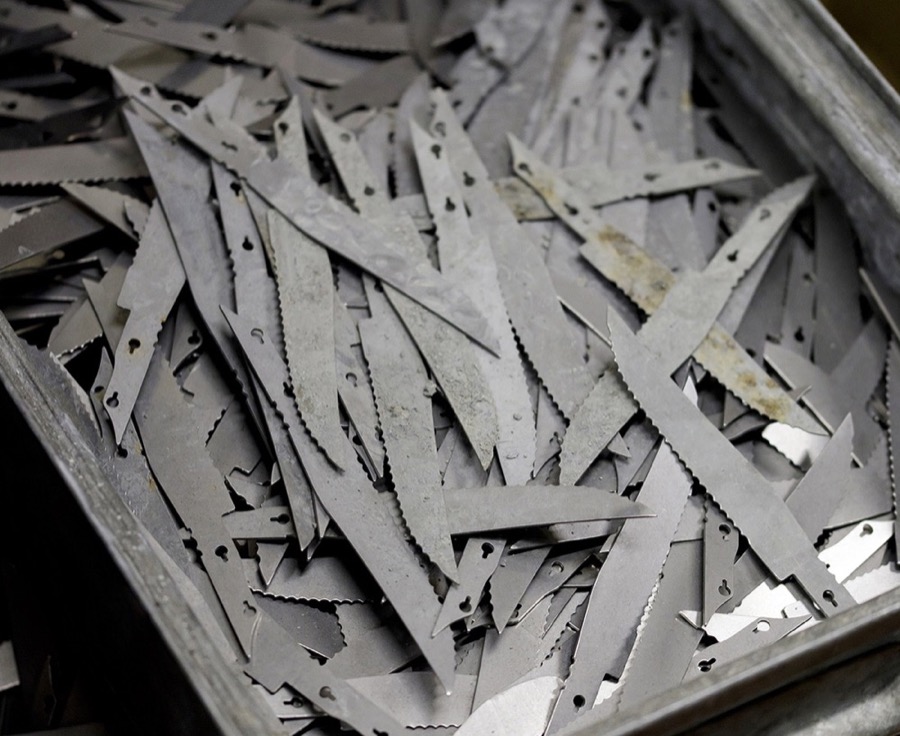
It all starts with choosing the steel from European steelmakers: stainless for table and kitchen, specific steels for pocket blades. Its composition determines the edge, its retention and rust resistance.
-
 2
2Cutting
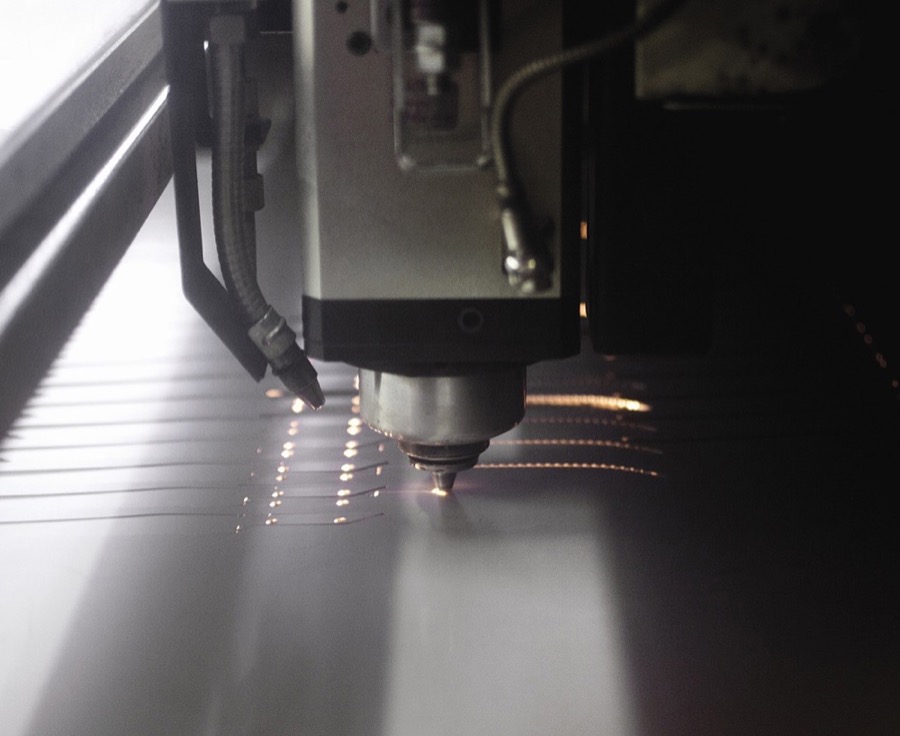
The blade is designed on computer, then laser-cut from the steel sheet. One of Thiers' first laser cutting machines arrived here in 1995.
-
 3
3Hardening and grinding
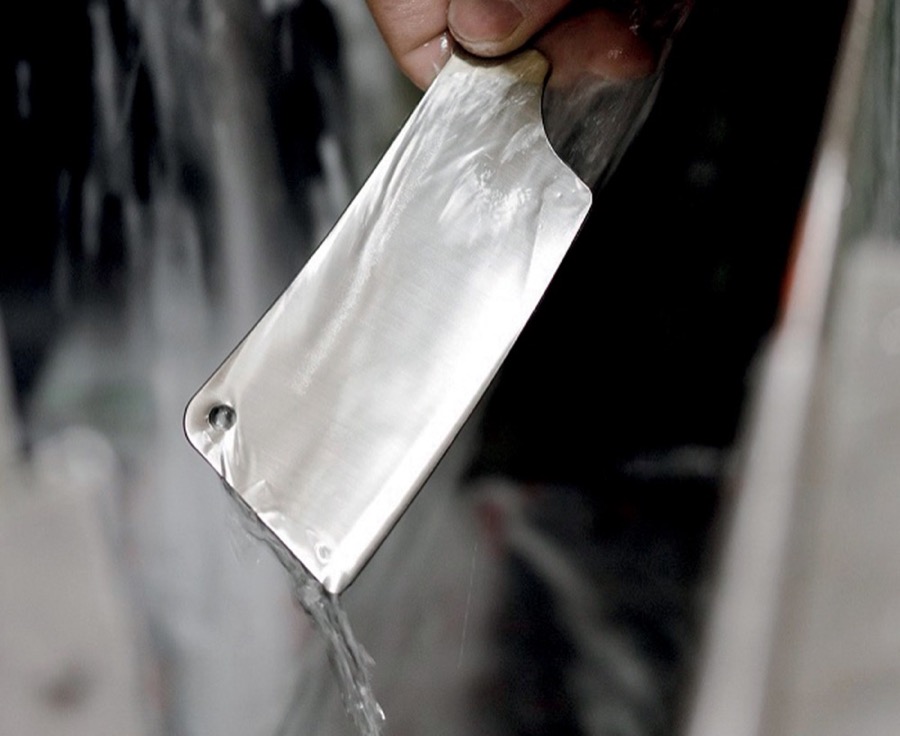
Heated then quenched, the blade gains its hardness, checked piece by piece. Grinding gives its profile: the bevel running from the thick spine down to the edge.
-
 4
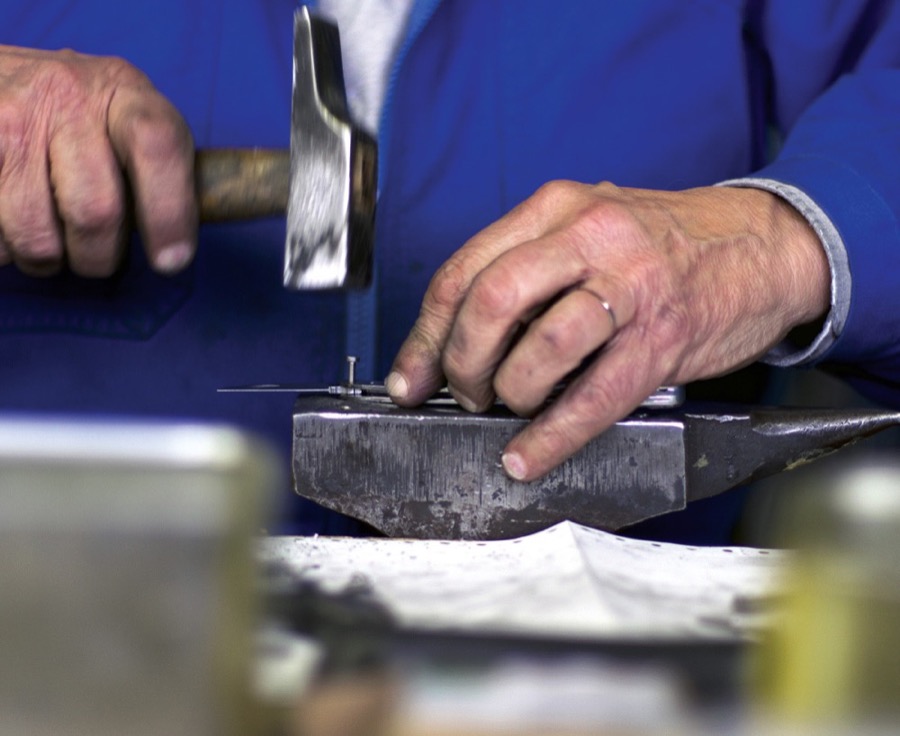
4Assembly
The handle is fitted to the blade: wood or horn scales, bolsters, rivets, a spring for folding knives. This is where hands do the most, by hammer and by eye.
-
 5
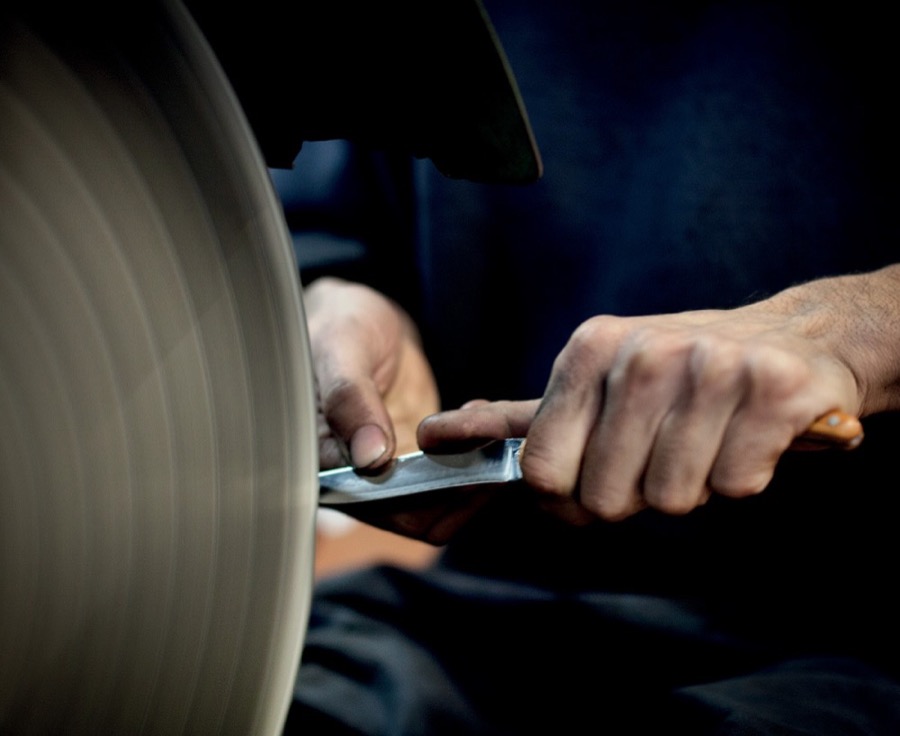
5Sharpening and polishing
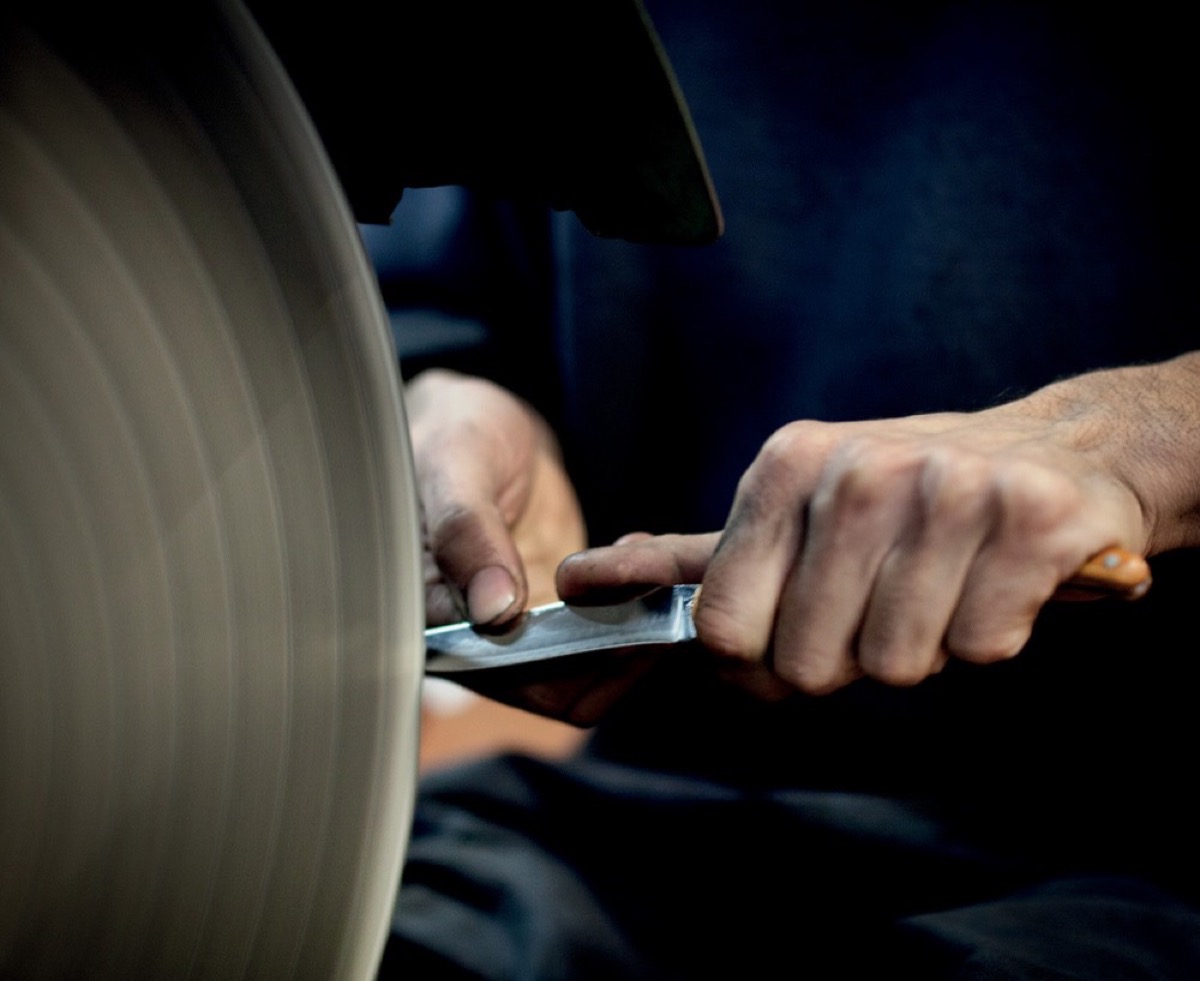
At the grinding wheel, the sharpener gives the edge. The handle is shaped, sanded and polished until the hand feels no edge at all.
-
 6
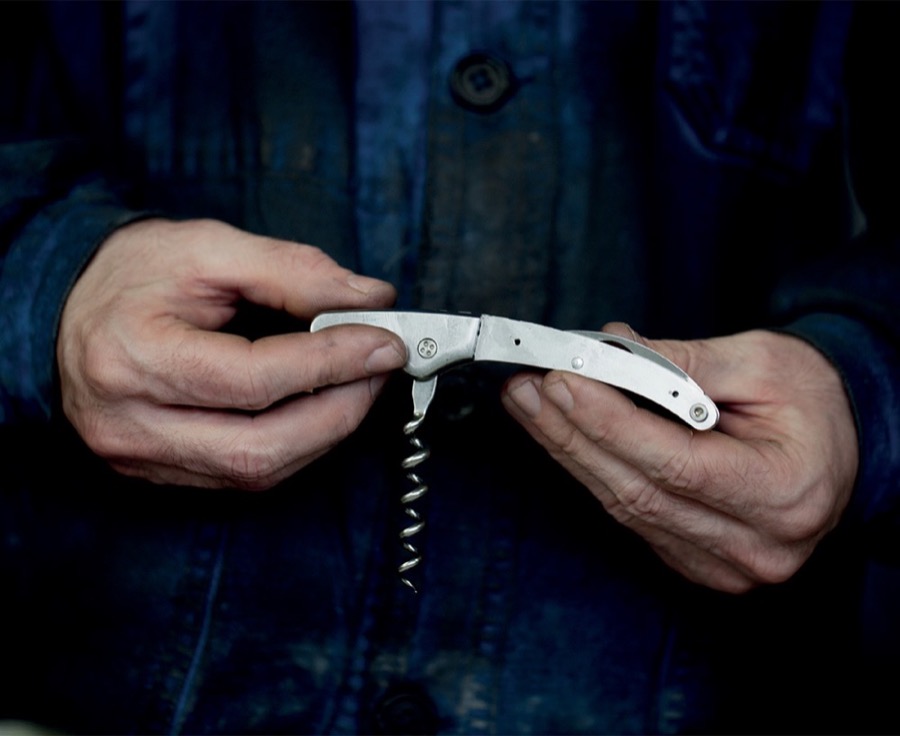
6Inspection
Every knife is checked before it leaves: edge, blade play, handle fit, finish. Some forty steps separate the steel sheet from the finished knife.
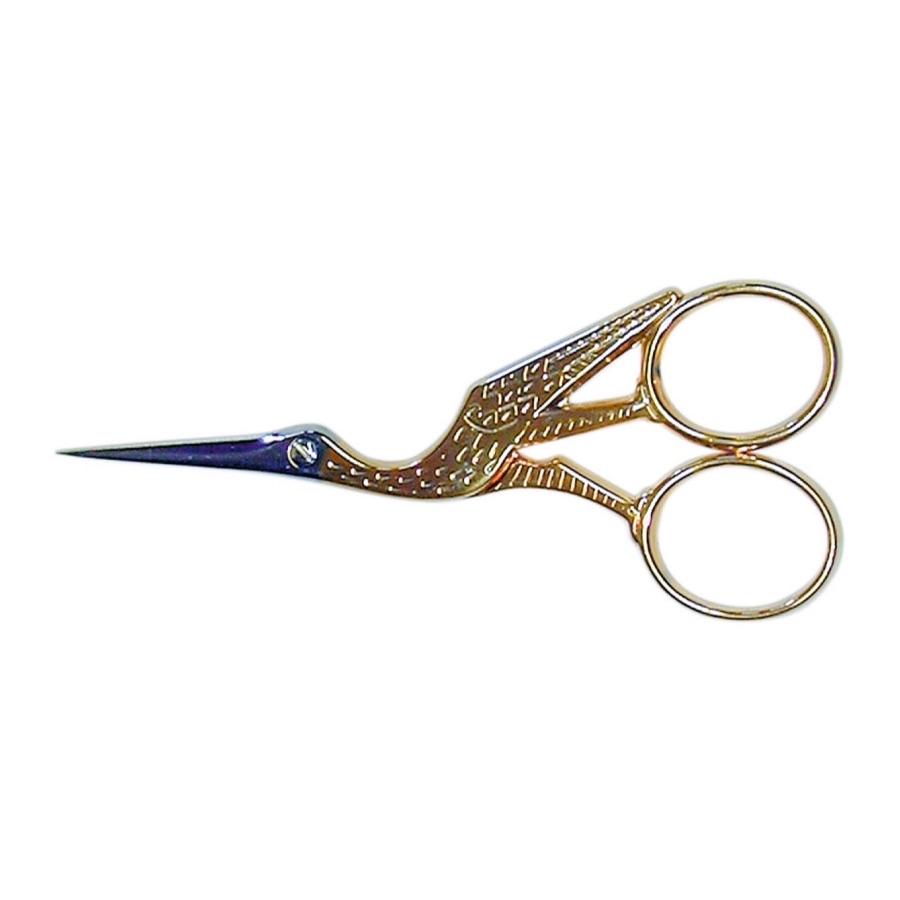
At Locau
Hot-forged scissors
Locau scissors and pruning shears are hot-forged as they used to be: the blades are struck from red-hot steel, cut, drilled, hardened, ground, then assembled and adjusted by hand for a clean cut right to the tip. About ten steps, the last of which, adjustment, is only entrusted to an experienced hand.
Materials
What you hold in your hand
Wood
Olive, juniper, ebony, boxwood, bocote, rosewood: every handle is unique, with its own grain.
Horn and bone
Blond or black horn, stag, ram, buffalo: natural materials, warm in the hand.
Precious materials
Mother-of-pearl, shagreen, mammoth molar, feather or watch-movement inclusions.
Technical materials
Acrylic, carbon, aluminium: light, colourful and maintenance-free, for every day.
A guaranteed origin
Le Thiers® and the Jurande
Le Thiers® is a knife created by the town's own cutlers. A quality charter, the Jurande, governs its shape and requires it to be made in the Thiers area. When you hold a Le Thiers®, you know where it comes from.
Care
To make it last a lifetime
By hand
Wash your knife by hand and dry it at once. The dishwasher damages handles and dulls blades.
A drop of oil
Now and then, a drop of oil on the pivot keeps a pocket knife smooth.
Proper sharpening
A sharpening stone or steel, held at a constant angle, is enough to restore the edge.
The right surface
Cut on a wooden or soft board, never on glass or stone.